




MERINO WOOL vs ORGANIC COTTON: WHICH ONE IS RIGHT FOR YOU?
Discover the differences between merino wool and organic cotton, and find out which natural fiber suits your comfort and your climate best.
Merino wool and organic cotton sit at the heart of the L'Envers collection, yet they solve very different problems.
One is built to regulate temperature and retain warmth, the other to breathe and stay gentle against the skin.
Knowing what each fiber actually does makes it easier to choose the right sweater or top for the season, the climate, or simply how your skin reacts to fabric.
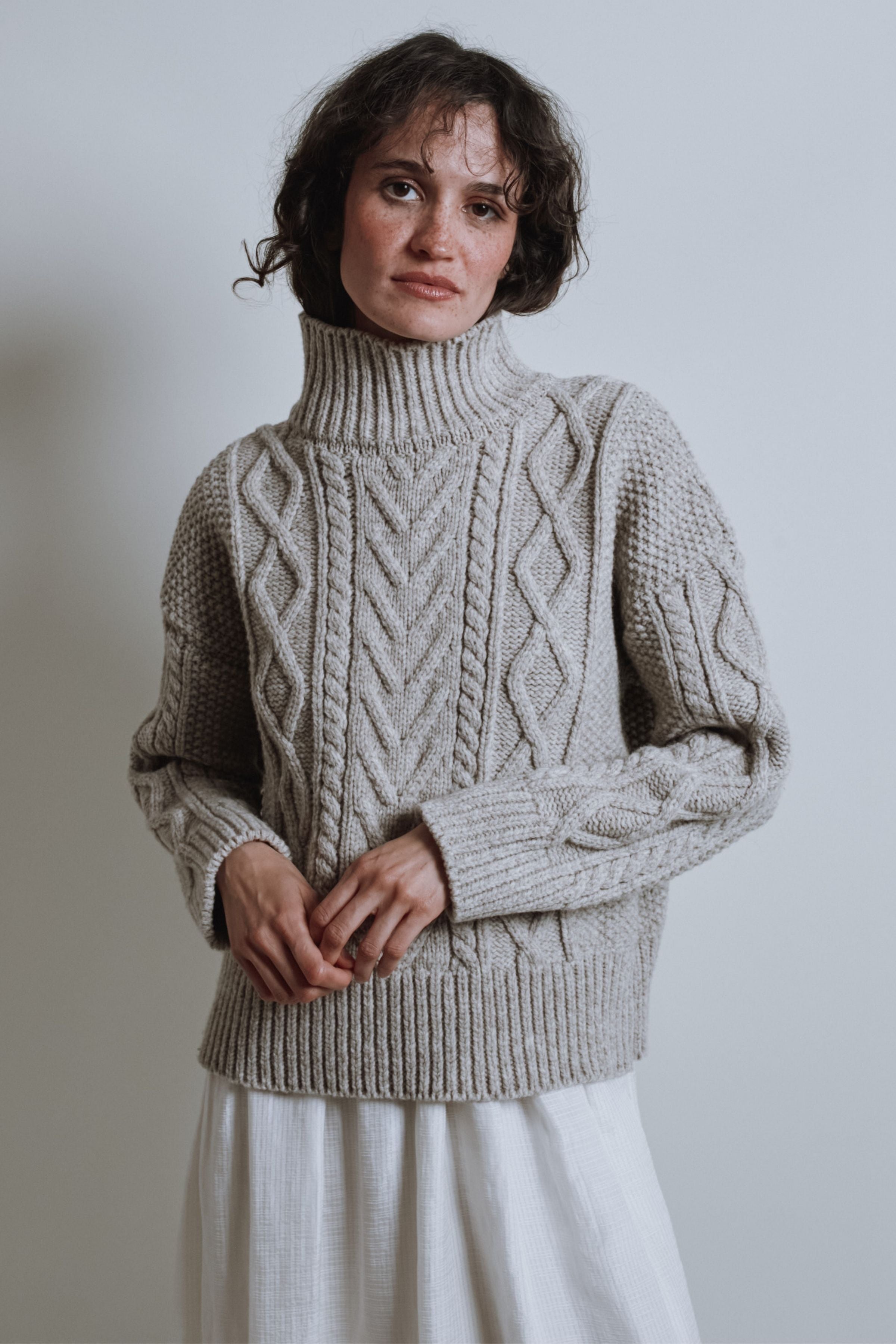
What Merino Wool Offers
Merino wool comes from a specific breed of sheep known for producing an exceptionally fine fiber, finer than most other wools, which is what makes it soft rather than itchy.
This natural temperature regulation is why a merino sweater works nearly year round, adjusting to both a cool morning and a heated indoor space without needing to be swapped out.
Merino also resists odor naturally, since its fiber structure limits the bacteria growth responsible for smell in most fabrics. That makes it a practical choice for pieces worn several days in a row, such as cardigans, which move easily between office days and weekend layering.

What Organic Cotton Offers
Organic cotton takes a different approach entirely.
Grown without synthetic pesticides or fertilizers and certified GOTS, it is prized above all for its softness and breathability.
At L'Envers, our cotton is grown in India using only rainwater rather than irrigation, then spun locally before being dyed in Portugal using OEKO-TEX certified processes.
Unlike merino, organic cotton does not insulate as effectively, but it breathes exceptionally well, which makes it the more comfortable option for warmer days or for layering underneath something warmer once temperatures drop.
Our organic cotton collection leans into this strength, with pieces designed to feel light rather than warm.
Two natural fibers, two very different ways of keeping you comfortable
Two Fibers, One Approach to Quality
Comparing Warmth and Breathability
Merino wool actively helps regulate body temperature, keeping warmth in during cold weather while wicking away moisture during activity or warmer moments.
Organic cotton, by contrast, prioritizes airflow. It performs best when the goal is comfort in mild or warm conditions rather than active insulation against the cold.
Comparing Comfort on the Skin
Merino's fine fiber diameter reduces the itchiness.
Organic cotton goes a step further for anyone with particularly reactive or sensitive skin, since it contains no lanolin and involves no animal fiber at all.
Comparing Care and Longevity
Merino wool should generally be washed cold and dried flat to preserve its shape and softness over time.
Organic cotton is more forgiving, tolerating both hand washing and machine washing without the same risk of shrinking or losing shape, which makes it a practical option for pieces worn frequently.



Two fibers, one wardrobe decision made simple
Merino vs Organic Cotton: Your Questions Answered
Yes. Merino actively insulates and regulates temperature, while organic cotton is valued mainly for its breathability rather than warmth.
Organic cotton is generally the gentlest option for very sensitive or reactive skin, though fine merino wool is well tolerated by most people too.
Both are considered responsible choices when certified. L'Envers uses non-mulesed merino wool and GOTS-certified organic cotton, prioritizing animal welfare and reduced environmental impact in both cases.
Yes. Its moisture-wicking properties make lightweight merino pieces comfortable even outside of winter, though organic cotton tends to feel cooler in hot conditions.
Organic cotton can shrink slightly if washed in hot water, so a cool wash is recommended to preserve its fit over time.
FREE SHIPPING
from 300€ to Europe, from 320€ to North America, UK, Swiss, from 360€ to Asia
FLEXIBLE EXCHANGE AND RETURNS
within 30 days
3-PART PAYMENTS
with SplitIt
CUSTOMER SERVICE
Contact Us for advice and customization
JOIN THE COMMUNITY


Sign up to receive email updates on new product announcements, to discover more about L’Envers and more!